
Home >> Algebra - Simultaneous Equations
Coursework Notes - Algebra
By substitution
The method is to re-arrange one of the equations in the form 'x =' or 'y =' and substitute the value of x or y into the second equation.
Example #1
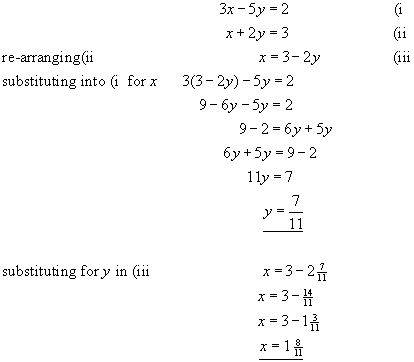
Example #2
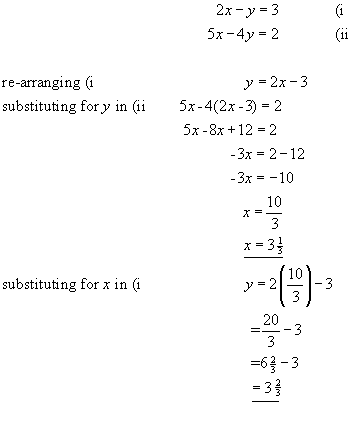
Example #3
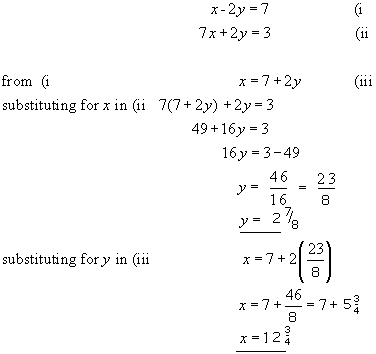
By elimination
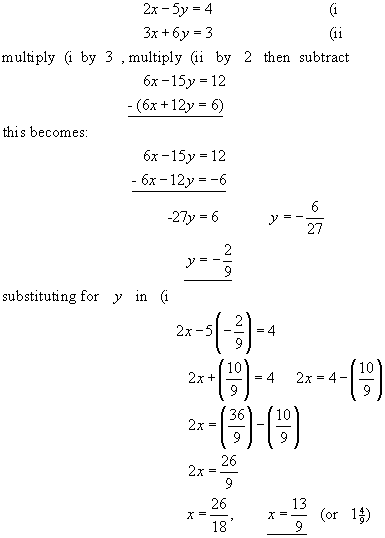
Here one equation is altered to make one term in each equation the same(disregarding the +/- sign). These terms are then added or subtracted to eliminate them.
Example #1
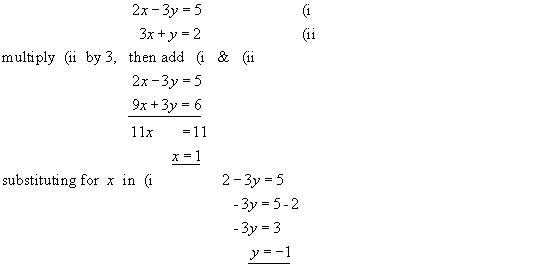
Example #2
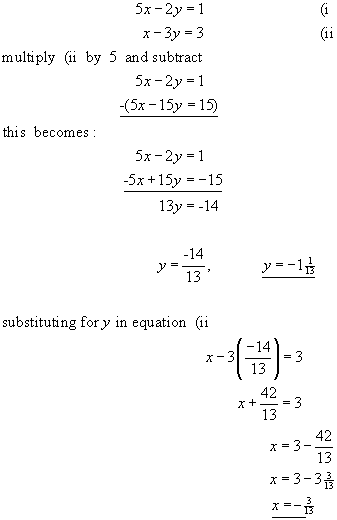
Example #3
Using graphs
For two separate functions, first write tables for x & y. Then draw the graphs. Where the graph lines intersect is the point that satisfies both equations. Simply read off the x and y values at the point.
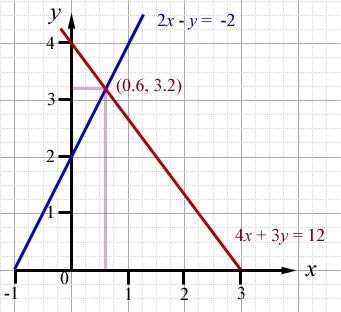
The reader may wish to verify the result by one of the other methods given above.
Example
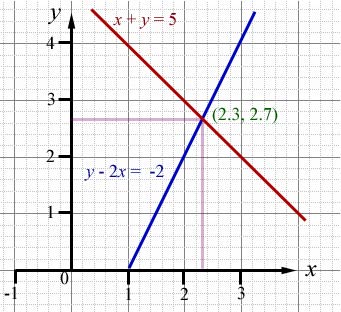
By a graphical method find the coodinates of a point that satisfies the equations x + y = 5 and y - 2x = -2 .
First draw your table, rearranging each equation to make 'y' the subject.
x |
1 |
2 |
3 |
y=5-x |
4 |
3 |
2 |
y=2x-2 |
0 |
2 |
4 |
Then plot the coordinates for each function, drawing straight lines through points.
Where the lines cross gives the solution (2.3,2.7) One decimal place is usually sufficient.
[ About ] [ FAQ ] [ Links ] [ Terms & Conditions ] [ Privacy ] [ Site Map ] [ Contact ]