
Home >> Algebra - Brackets
Coursework Notes - Algebra
[single term outside ][ two pairs brackets ][ difference of two squares ]
[ multiplying out - square brackets ][ factorising - simple ][ factorising quadratics ]
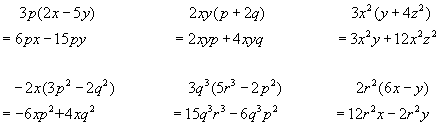
Multiplying Out(expanding) - a pair of brackets with a single term infront
The term outside the brackets multiplies each of the terms in turn inside the brackets.
example:

further examples:
Multiplying Out(expanding) - two pairs of brackets
Think of the two terms in the first bracket as separate single terms infront of a pair of brackets.
example:

Multiply the contents of the 2nd bracket by the 1st term in the 1st bracket.
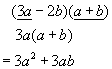
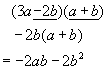
Multiply the contents of the 2nd bracket by the 2nd term in the 1st bracket.
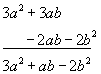
Add the two results together.
Example #1
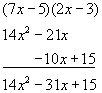
Example #2
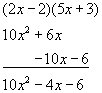
Example #3
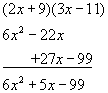
Squared Brackets
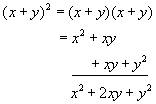
note: a common mistake
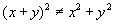
Difference of Two Squares
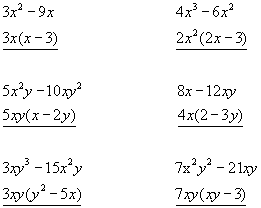
Brackets - Simple Factorising - This involves taking out a common term from each expression and placing it infront of the brackets.
examples:
Factorising Quadratic Expressions
This is best illustrated with an example:

You must first ask yourself which two factors when multiplied will give 12 ?
The factors of 12 are : ........1 x 12, ..............2 x 6, ...............3 x 4
Now which numbers in a group added or subtracted will give 7 ?
1 x 12 gives 13, 11 ..............2 x 6 gives 8, 4 .....................3 x 4 gives 7, 1
so

which of the '+' & '-' terms makes +12? ........and when added gives -7?
clearly, (-3)(-4) are the two factors we want
therefore

Example #1
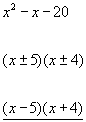
Example #2

Example #3

[ About ] [ FAQ ] [ Links ] [ Terms & Conditions ] [ Privacy ] [ Site Map ] [ Contact ]